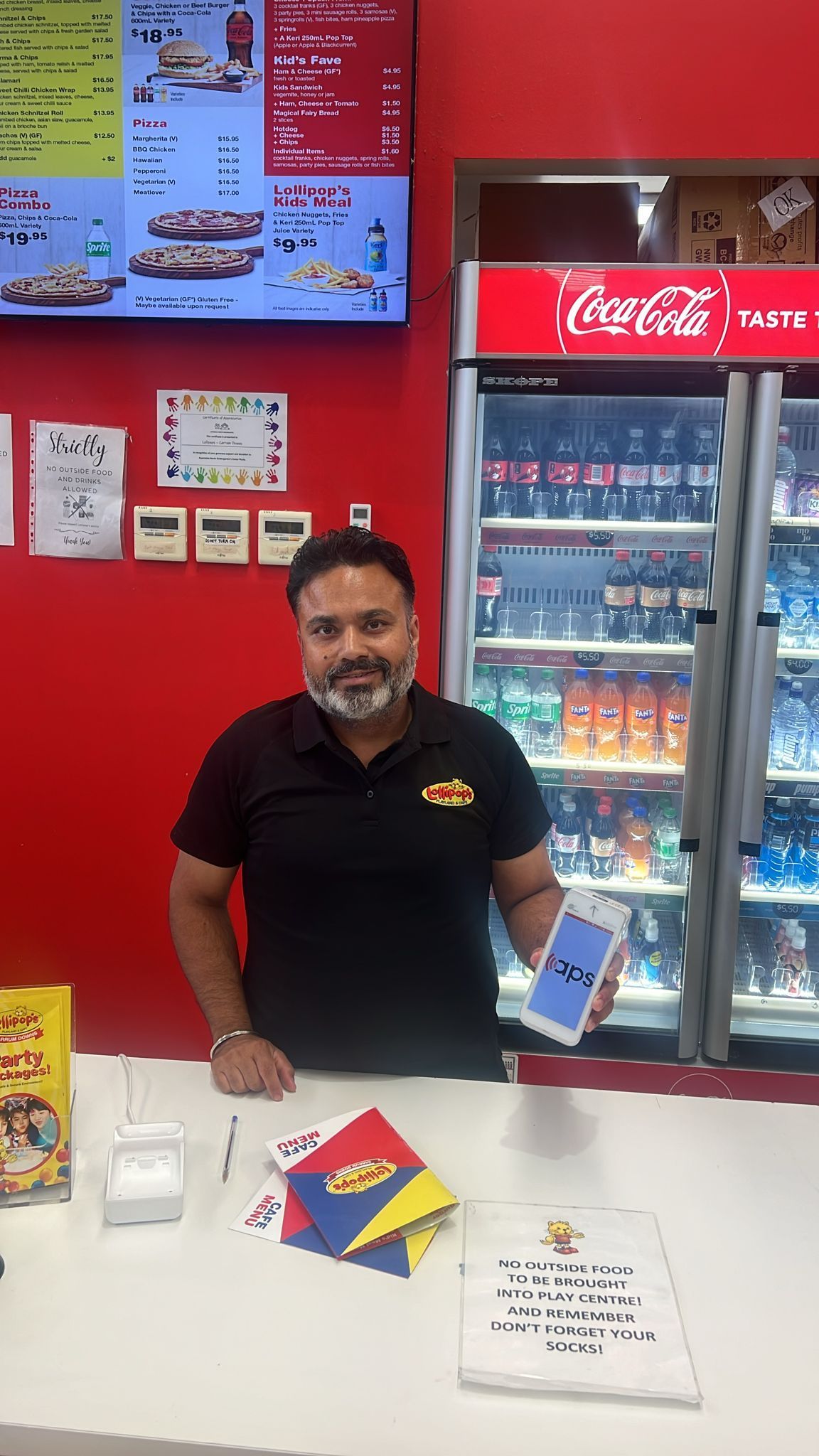
The RBA surcharge ban 2026 is one of the most significant changes to Australian payments in over a decade. From 1 October 2026, businesses across Australia can no longer add a surcharge at the checkout for EFTPOS, Visa, or Mastercard transactions. If your café, retail store, restaurant, or service business currently passes card processing costs on to customers, you need to act now — well before the deadline.
This guide breaks down exactly what the ban means, what the new interchange fee caps look like, how your pricing and POS setup will need to change, and how APS can help you manage the transition smoothly.
What Is the RBA Surcharge Ban and When Does It Start?
The Reserve Bank of Australia confirmed the surcharge ban in its March 2026 Conclusions Paper, following a lengthy review of Australia's payment system. The key date is 1 October 2026.
From that date, businesses are prohibited from charging a surcharge on:
- Debit card transactions (including EFTPOS and tap-and-go)
- Prepaid card transactions
- Credit card transactions on the Visa and Mastercard networks
This covers the vast majority of card payments made by Australian consumers every day. The rule applies to all designated payment networks under the Payments Systems (Regulation) Act 1998.
It's important to note that the reform applies to consumer-facing surcharges — the visible fee added at the point of sale. Businesses will still pay merchant service fees to their payment provider, but they'll no longer be allowed to pass that cost directly to the customer as a separate line item.
A second tranche of the reform — covering foreign-issued cards — takes effect from 1 April 2027. Online retailers and businesses that process international transactions should mark both dates in their calendar.
How Did Card Surcharging Work — and Why Is It Being Banned?
Under the current model, businesses accepting card payments often add a visible surcharge at checkout — typically between 1% and 1.5% — to recover their merchant service fees. In theory, this was meant to be transparent: customers could see what card acceptance cost and make an informed choice about payment method.
In practice, here's how it played out:
A real-world example: A customer buys a $15 coffee and pastry. The café adds a 1.5% surcharge. The customer pays $15.23. The 23-cent fee feels arbitrary, creates friction, and — as data showed — didn't actually change many customers' payment behaviour.
The RBA concluded the system had several problems:
- Surcharges became near-universal. Rather than a selective tool, surcharging became standard practice across retail, hospitality, and services.
- Consumer confusion increased. With no consistency in surcharge rates, customers struggled to predict their final cost at checkout.
- Transparency was undermined. The advertised price no longer reflected the actual price paid.
- Costs were regressive. Customers who relied on debit cards — often lower-income households — paid surcharges even though debit transactions cost merchants less to process than credit.
The ban aims to restore pricing clarity. When businesses absorb the cost of card acceptance into their base prices, the checkout experience becomes cleaner and more predictable for everyone.
What Changes to Interchange Fees Are Coming With the Ban?
You can't understand the surcharge ban without understanding interchange fees — because lower interchange caps are the key reason the RBA is confident businesses can absorb card costs post-ban.
What is an interchange fee? Every time a customer taps their card, the merchant's bank (the acquiring bank) pays a fee to the customer's bank (the issuing bank). This fee — set by the card network — is the interchange fee. It's a wholesale cost that flows through to merchants via their merchant service fee.
New interchange fee caps confirmed for 2026/27:
| Card Type | Current Benchmark | New Cap (from Oct 2026) |
|---|---|---|
| Domestic debit | ~0.20% | 0.16% |
| Domestic credit | ~0.50% | 0.30% |
| Commercial cards | ~1.0%+ | 0.80% |
| Foreign-issued cards | Varies | 1.0% (from 1 April 2027) |
These lower interchange fee caps directly reduce the wholesale cost of card acceptance. The RBA's position is that, combined with the surcharge ban, merchants will be paying less for card processing while consumers pay a consistent advertised price.
The foreign card interchange cap is a notable addition. If your business — whether a CBD retailer, tourism operator, or e-commerce store — processes a meaningful volume of overseas-issued Visa or Mastercard transactions, that cap won't apply until 1 April 2027. Plan accordingly.
What Does the Surcharge Ban Mean for Retailers, Cafes, and Restaurants?
Here's the reality: payment costs don't disappear on 1 October 2026 — they just become invisible to the customer.
Your merchant service fees continue. You'll still pay your payment provider for processing each transaction. The difference is you can no longer recover that cost with a visible surcharge. You'll need to absorb it into your base pricing.
What this means in practice:
- A café charging $5.00 for a flat white with a 1.5% surcharge is effectively charging $5.075 per card payment. Post-ban, the price will need to be $5.10 on the menu to maintain the same margin.
- A retailer selling a $100 item with a 1.5% surcharge earns $101.50 per card transaction. Post-ban, the sticker price needs to reflect that margin.
"But can't customers just pay cash?"
No — not realistically. Cash now accounts for approximately 10% of all Australian transactions, down from over 60% a decade ago. The vast majority of your customers will continue paying by card regardless of the surcharge removal. Cash is not a viable fallback strategy for most businesses.
What about credit card use? Expect it to increase. When the visible surcharge penalty disappears, the psychological deterrent against using a credit card goes with it. Consumers who previously chose debit to avoid a surcharge may shift back to credit. This matters for your cost modelling: credit card interchange fees (even under the new caps) are higher than debit. Budget for a potential shift in your payment mix.
Why Did Bank Shares Rise After the Surcharge Ban Announcement?
When the RBA announced the surcharge ban, bank stocks moved upward — which surprised some observers. Why would banks benefit from a reform that cuts some of their fee income?
A few reasons investors likely reacted positively:
- The outcome was less severe than feared. Pre-announcement speculation included more aggressive caps. The final package was considered measured and commercially manageable.
- Transaction volumes remain intact. The card payment system stays the dominant infrastructure. Banks and networks retain their central role — the reform doesn't create a new payment rail that bypasses them.
- Credit card use is expected to rise. Without the visible surcharge acting as a deterrent, consumers are likely to reach for their credit cards more often. That increases credit transaction volumes — and with it, interchange and interest revenue for card issuers.
- The fee structure survives. While interchange caps drop, the commercial card cap (0.8%) and foreign card cap (1.0%) are not negligible. Banks processing corporate and international payments retain meaningful fee income.
For business owners, the investor reaction is a useful signal: the payment system isn't being dismantled, it's being re-priced. The infrastructure you rely on is staying in place.
What Businesses Need to Do Before 1 October 2026
Don't wait until September. Here's a practical checklist to get your business surcharge-ban ready:
1. Review Your Merchant Services Agreement
Contact your payment provider now. Ask for a breakdown of your current merchant service fees, interchange fee composition, and what changes they're implementing ahead of October 2026. Understand what you're actually paying today.
2. Recalculate Your Base Pricing
Work out what card acceptance actually costs your business as a percentage of revenue. Model whether you need to increase prices to absorb those costs — and if so, by how much. Do this before October, not after.
3. Reconfigure Your POS Terminal
This is the step most businesses miss. Your POS system needs to be physically reconfigured to remove surcharge prompts before 1 October 2026. If your terminal currently adds a surcharge automatically, it will keep doing so unless you change the settings. Contact your terminal provider or POS software vendor to arrange this.
4. Update Your Signage and Price Lists
If you currently display surcharge notices (as required by the ACCC), those need to come down. Ensure your printed menus, price tags, and website pricing reflect your post-ban pricing model.
5. Train Your Staff
Your front-of-house team will get questions from customers. Make sure they can explain that prices now include card acceptance costs — and that no surcharge will appear at checkout.
6. Understand Enforcement
The ACCC oversees surcharge compliance in Australia. Businesses that continue surcharging after 1 October 2026 face infringement notices and financial penalties. The RBA sets the rules; the ACCC enforces them. Non-compliance is not a minor administrative issue — treat the deadline seriously.
How Your POS System and Merchant Reporting Will Matter More After the Ban
Once surcharges disappear from the checkout, your internal cost visibility becomes critical. You're no longer recovering payment costs in real time through a visible fee — they're now baked into your margins and need to be managed proactively.
This means your POS dashboard and merchant reporting need to give you:
- A clear breakdown of transaction fees by card type (debit vs. credit vs. commercial)
- The ability to track your effective merchant service rate month-to-month
- Visibility over your payment mix (how many transactions are debit, credit, contactless)
Why does the payment mix matter? Because under the new interchange caps, debit transactions will cost you roughly half what credit transactions cost. If your payment mix shifts toward credit post-ban (which the RBA expects), your cost base goes up — even though individual fee rates have dropped.
A good POS reporting setup helps you spot these shifts early and adjust pricing if necessary.
The surcharge ban also creates a natural opportunity to review your payment provider. With no surcharges to navigate, switching to a more transparent, competitively priced provider is simpler. You're not locked into a system designed around surcharge pass-through — you can choose a provider based purely on fee rates, reporting quality, and service.
How APS Helps Australian Businesses Prepare for the Surcharge Ban
APS works with retailers, cafés, restaurants, pharmacies, and market operators across Australia — businesses for which card payment compliance and cost management are everyday realities, not abstract policy questions.
Here's how APS supports your transition to the post-surcharge environment:
Transparent, low-rate merchant fees APS structures merchant fees to reflect the new interchange caps, so you're not paying inflated rates based on old pricing models. You'll know exactly what you're paying per transaction type.
POS integration and terminal reconfiguration APS works with you to ensure your POS system is correctly configured before 1 October 2026 — surcharge prompts removed, pricing updated, and terminals compliant from day one.
Clear reporting dashboard Through the APS platform, you get real-time visibility over your payment costs — broken down by card type, transaction volume, and fee rate. This is the reporting you'll need to manage margins intelligently once surcharges are gone.
Transition support for pricing reviews Not sure how to reprice your menu or product range to absorb card costs? APS can help you model the impact on your margins and make informed decisions before the deadline.
Ongoing compliance confidence As the RBA has flagged further consultation on e-commerce and online payment platforms, the regulatory landscape will keep evolving. APS keeps clients informed as new rules are confirmed, so you're never caught off-guard.
Competitors in the payment space offer similar infrastructure, but APS's focus on Australian small and medium businesses — particularly in hospitality, retail, and healthcare — means you're working with a provider that understands the operational realities of your business, not just the payment rails underneath it.
Get Your Business Ready for October 2026
The RBA surcharge ban 2026 is coming regardless of where you stand on the policy. The businesses that will navigate it best are those that act early — reviewing their merchant agreements, repricing their products and services thoughtfully, and ensuring their POS systems are compliant before the deadline.
APS helps Australian businesses do exactly that. Whether you're running a café in Fitzroy, a pharmacy in Parramatta, or a retail store on the Gold Coast, APS gives you the payment infrastructure, transparent fee reporting, and compliance support you need to operate confidently under the new rules.
Don't wait until October. Visit aps.business today to review your current merchant setup and get ahead of the surcharge ban.


