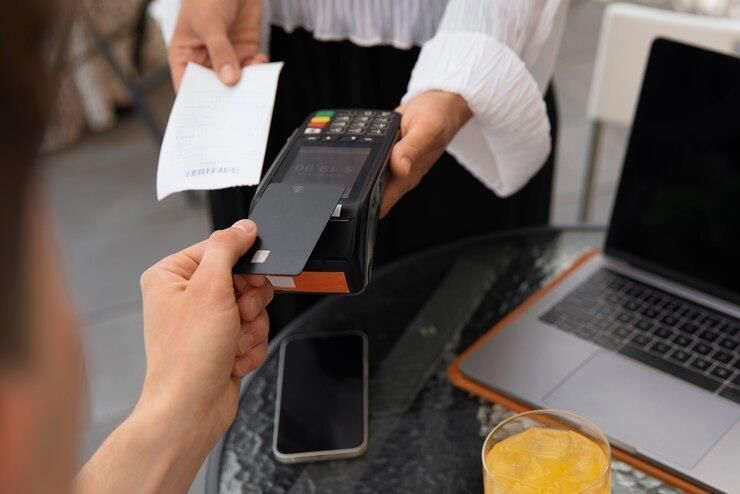
A mobile EFTPOS machine is a portable card payment terminal that lets Australian businesses accept Visa, Mastercard, eftpos, and contactless payments anywhere — without a fixed counter or Wi-Fi dependency. The best mobile EFTPOS machines use a multi-network SIM for reliable connectivity, offer all-day battery life, and settle funds quickly into your business bank account.
Thousands of Australian businesses already rely on the APS platform to process payments every day — part of a broader network supporting over 45,000 businesses across Australia and New Zealand. That scale means the infrastructure behind every transaction is proven, stable, and built for real merchant needs.
What Is a Mobile EFTPOS Machine and Why Does Your Business Need One?
A mobile EFTPOS machine is a handheld, wireless payment terminal that processes card transactions wherever you are — at a customer's table, on a job site, or at a weekend market. It needs no fixed phone line and no permanent counter installation.
Cash usage in Australia has been declining steadily for years. According to the Australian Payments Network (AusPayNet), card and contactless payments now dominate everyday transactions, with the vast majority of point-of-sale payments made by tapping a card or phone. In 2026, turning away card-paying customers is no longer a minor inconvenience — it's lost revenue.
Industries where a portable EFTPOS terminal is now essential:
- Hospitality — waitstaff taking payments tableside or at the bar
- Retail — pop-up shops, markets, and mobile boutiques
- Health and beauty — therapists, mobile hairdressers, and practitioners visiting clients at home
- Trades — plumbers, electricians, and builders collecting payment on completion
- Events and festivals — food stalls, merchandise sellers, and ticketing
If your customers move, you need a terminal that moves with them.
What to Look For Before You Buy a Mobile EFTPOS Machine
The right terminal comes down to five practical criteria that affect your daily operations — not just the sticker price.
1. Connectivity: 4G SIM vs Wi-Fi A terminal that relies solely on your venue's Wi-Fi will let you down the moment the router drops. A 4G SIM-connected terminal uses the mobile network, so you stay live even when broadband fails. Multi-network SIM capability — connecting across multiple carriers automatically — is the gold standard for Australian merchants operating outside metro areas.
2. Battery life Look for a terminal rated for a full trading day. A terminal that dies at 2 pm during a busy lunch service or at hour four of an eight-hour market is a serious operational problem.
3. Screen size and ease of use Staff need to read totals quickly and customers need to see what they're tapping to confirm. A clear, responsive screen reduces checkout errors and queue time.
4. POS system compatibility If you use existing point-of-sale software, confirm the terminal integrates properly before you commit. Incompatible hardware creates manual reconciliation headaches.
5. Contract terms and fees This is where many small business owners get caught out. Watch for:
- Long lock-in contracts (12–36 months)
- Establishment or activation fees charged upfront
- Monthly minimums even in quiet periods
- Chargeback fees and cancellation penalties
Read the full fee schedule — not just the advertised transaction rate — before signing anything.
How APS Makes Mobile Payments Simple for Australian Businesses
APS is built specifically for Australian merchants who need reliable, no-fuss payment processing without enterprise-level complexity. The platform handles everything from hardware through to settlement, with pricing that is straightforward from day one.
What sets APS apart for Australian merchants:
- Multi-network SIM connectivity — terminals connect across Australia's mobile networks automatically, so you are not at the mercy of a single carrier's coverage gaps
- Simple, transparent pricing — no surprise fees buried in fine print
- Industry-wide suitability — the same platform serves cafés, retailers, tradespeople, market vendors, and health practitioners without requiring industry-specific workarounds
- PCI DSS compliance — APS adheres to Payment Card Industry Data Security Standards, making it suitable for regulated industries including health and hospitality
When you buy a mobile EFTPOS machine through APS, you get purpose-built hardware backed by infrastructure that serves thousands of active Australian merchants daily. That is not a marketing claim — it is the operational baseline the platform is built on.
Understanding EFTPOS Machine Costs: Purchase, Rental, and Ongoing Fees
The honest cost breakdown for Australian merchants in 2026.
There are three real cost components when you buy a mobile EFTPOS machine: hardware, ongoing fees, and transaction rates.
| Cost Type | Typical Range | What to Watch For |
|---|---|---|
| Upfront purchase | $99–$400+ | Square charges ~$329; Zeller ranges from ~$99–$199 |
| Monthly rental | $0–$45/month | Rental locks you in — check cancellation terms |
| Transaction rate | 1.4%–1.6% flat | Flat-rate providers include Square and Tyro |
| Establishment fee | $0–$99 | Often buried — ask explicitly |
| Chargeback fee | $15–$35 per dispute | Applies when a customer disputes a transaction |
| Cancellation fee | Up to several hundred dollars | Critical to check before signing |
Flat transaction rates from providers like Square (1.6%) or Zeller are simple but may not be the lowest cost depending on your volume and card mix. Higher-volume merchants often benefit from interchange-plus pricing or negotiated rates.
APS pricing is designed to be transparent — the rate you are quoted is the rate you pay, with no hidden fees stacked underneath.
The real cost is not just the device. A $99 terminal with high monthly fees and a 24-month lock-in often costs more over two years than a more expensive terminal with no contract.
Battery Life, Connectivity, and Settlement — The Features That Actually Matter
These three features determine whether a terminal works for your business in the real world — not just on a product page.
Battery life A café owner in regional Victoria running the morning rush from 6 am to 2 pm needs a terminal that lasts those eight hours without hunting for a charger mid-service. Their venue Wi-Fi drops regularly during peak periods, which is exactly why the multi-network SIM in their APS terminal keeps transactions processing without interruption — even when the broadband connection goes down.
Multi-carrier SIM connectivity Single-carrier SIM terminals are a risk in regional Australia and even in busy urban areas where one network is congested. Multi-network SIM capability means the terminal switches automatically to the strongest available signal — you do not manage this manually, it just works.
Settlement speed Under the Reserve Bank of Australia's payment system framework, settlement timelines are a key cash flow consideration for small businesses. Same-day or next-business-day settlement means funds from Friday afternoon's market sales are in your account on Monday morning — not waiting until mid-week.
Surcharging The RBA permits merchants to pass on card acceptance costs to customers via a surcharge, provided it reflects the actual cost of acceptance and is clearly disclosed. The ACCC enforces rules against excessive surcharging. APS terminals support surcharging in compliance with these guidelines, so you can recover costs without overcharging customers.
A handmade goods seller at a weekend farmers' market in Queensland needs all three of these working together: eight-hour battery, reliable 4G away from venue Wi-Fi, and settlement that clears before the working week begins.
Accepting Every Payment Type: Cards, Contactless, and Digital Wallets
In 2026, customers expect to pay however they want — your terminal needs to keep up.
A quality portable EFTPOS terminal accepts:
- Visa and Mastercard — credit and debit
- eftpos — Australia's domestic debit network
- American Express — important for business customers and travellers
- Apple Pay and Google Pay — digital wallet tap-and-go payments via smartphone or smartwatch
- Contactless tap — cards and wearables under the tap limit
- Buy Now Pay Later (BNPL) — increasingly expected, particularly in retail
Contactless adoption in Australia is among the highest in the world. According to AusPayNet data, the overwhelming majority of in-person card transactions are now made via tap-and-go. A terminal that cannot handle contactless in 2026 is already behind.
Refunds and voids should be processed directly on the terminal without requiring a phone call to support or manual bank adjustments. APS terminals handle refunds and transaction voids on the spot, keeping your customer service clean and your records accurate.
Which Australian Businesses Benefit Most from a Portable EFTPOS Terminal?
Almost any business that moves — or whose customers move — benefits from a wireless EFTPOS machine.
Here is how different verticals use portable terminals in practice:
Cafés and restaurants Tableside payment reduces queue time at the counter, improves table turnover, and eliminates the awkward walk to a fixed terminal. A busy brunch café processing 200+ transactions on a Saturday morning needs a terminal with fast processing and reliable connectivity.
Retail and pop-ups Mobile boutiques, pop-up stores, and markets have no fixed infrastructure. A wireless EFTPOS machine for small business is not optional — it is the entire payment system.
Health and beauty Mobile massage therapists, beauty technicians doing home visits, and allied health practitioners need a terminal that fits in a kit bag and processes payment on site.
Tradespeople Electricians, plumbers, and builders collecting payment at job completion use a mobile card payment terminal to avoid chasing invoices. Immediate payment on site improves cash flow significantly.
Market stalls and events A weekend market stall selling handmade goods, food, or plants operates entirely on portable infrastructure. Battery life, signal reliability, and fast tap-and-go are non-negotiable.
Festivals and pop-up events High-volume, short-duration events need terminals that process quickly and settle promptly. APS supports this environment without requiring complex setup.
How to Get Started with APS Today
Getting set up with APS is straightforward — no lengthy application process, no technical expertise required.
- Visit aps.business and select the terminal option that suits your business
- Complete the online signup — business details, bank account for settlement, and identity verification
- Receive your terminal — delivered to your door, pre-configured and ready to process payments
- Start accepting payments — tap, insert, or swipe from day one, with support available if you need it
APS is designed for Australian merchants who need to get moving fast — not spend weeks onboarding. Whether you run a café in regional Victoria, a market stall in Brisbane, or a mobile trades business in Perth, the setup process is the same: simple, fast, and backed by a platform serving thousands of active businesses.
Ready to Buy a Mobile EFTPOS Machine for Your Business?
If you are ready to buy a mobile EFTPOS machine that handles real Australian trading conditions — busy café mornings, outdoor markets, regional signal gaps, and fast-moving retail — APS is the straightforward choice. Transparent pricing, multi-network SIM connectivity, all-day battery, and same-day settlement make it the portable EFTPOS terminal built for how Australian businesses actually operate.
Visit aps.business today to get started.


