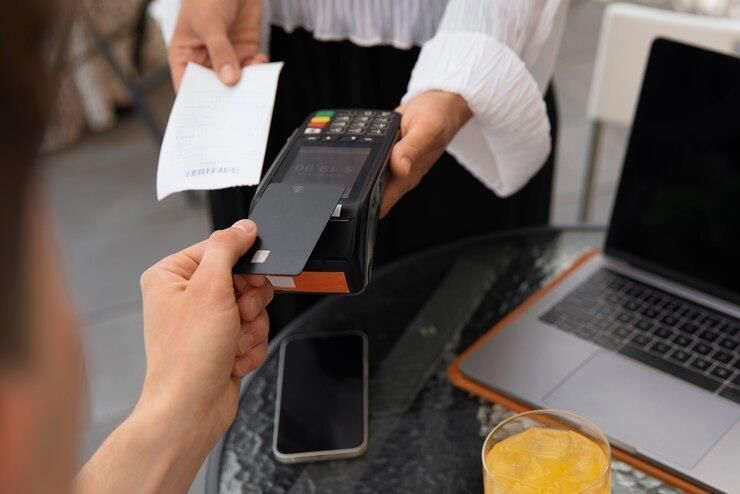
An EFTPOS terminal in Australia is a card payment device that electronically transfers funds from a customer's bank account to a merchant's account at the point of sale. Australian businesses across retail, hospitality, health, and services use EFTPOS terminals daily. Costs typically range from $0 to $50/month in rental fees, with transaction rates between 1.2% and 1.6%.
APS provides EFTPOS solutions for Australian businesses — from countertop terminals to portable wireless devices.
Whether you're running a café in Melbourne, a hair salon in Brisbane, or a weekend market stall in Sydney, accepting card payments is non-negotiable in 2025. This guide breaks down everything you need to know about EFTPOS terminals in Australia — costs, rules, types, and how to choose the right solution for your business.
What Is an EFTPOS Terminal and How Does It Work in Australia?
An EFTPOS terminal is a payment device that connects to Australia's domestic Electronic Funds Transfer at Point of Sale network, moving money directly from a customer's bank account to yours in real time.
EFTPOS — which stands for Electronic Funds Transfer at Point of Sale — is Australia's own domestic card payment network. It was first implemented by Westpac in 1984, making Australia one of the earliest countries in the world to adopt electronic point-of-sale payments at scale. That's over 40 years of infrastructure underpinning everyday commerce.
Here's how a transaction flows:
- A customer taps, inserts, or swipes their card on your terminal
- The terminal connects to the cardholder's bank via the EFTPOS or card scheme network
- The bank authorises the transaction in real time
- Funds are earmarked for transfer to your merchant account
- Settlement occurs — either same day or next business day, depending on your provider
The key distinction in Australia is that EFTPOS (the domestic network) operates separately from Visa and Mastercard schemes, though most modern terminals accept all three. When a customer uses a debit card and selects "cheque" or "savings," the transaction typically routes through the domestic EFTPOS network, which generally carries lower fees than scheme networks. This routing difference has real cost implications for merchants — something we'll cover in detail below.
Why EFTPOS Still Matters for Australian Businesses in 2025
EFTPOS remains the backbone of everyday Australian payments, with hundreds of thousands of terminals processing billions of dollars in transactions each year.
According to AusPayNet (Australian Payments Network), there were over 940,000 EFTPOS terminals in operation in Australia as of 2021 — a number that illustrates just how deeply embedded card payment infrastructure is in Australian commerce. That figure declined modestly post-2022 as some businesses consolidated hardware or moved to software-based solutions, but the volume of transactions continues to grow year on year.
EFTPOS terminals are used daily across:
- Retail — supermarkets, pharmacies, clothing stores
- Hospitality — cafés, restaurants, bars, food trucks
- Health and allied health — GP clinics, physios, dentists
- Professional services — accountants, beauty salons, tradespeople
- Events and markets — market stallholders, pop-ups, festivals
The shift away from cash is accelerating. The Reserve Bank of Australia reports that cash now accounts for fewer than 1 in 5 in-person transactions. Businesses that don't offer card payment options are losing customers — full stop.
For business owners, the question in 2025 isn't whether to have an EFTPOS terminal. It's which one and at what cost.
Types of EFTPOS Terminals Available in Australia
There are three main EFTPOS terminal types in Australia — countertop, portable, and mobile — and the right choice depends on how and where you serve your customers.
Countertop EFTPOS Terminals
These are fixed terminals that sit on a counter and connect via a phone line, Ethernet, or Wi-Fi. They're ideal for:
- Busy retail checkouts with high transaction volumes
- Reception desks in medical or professional practices
- Bar service where the terminal stays in one location
Countertop terminals are typically the most affordable to run and offer the fastest, most stable connection.
Portable (Battery-Powered) EFTPOS Terminals
Portable terminals use Wi-Fi or Bluetooth to connect and have an internal battery — usually lasting a full trading day on a single charge. These suit:
- Cafés and restaurants where staff bring the terminal to the table
- Salons and spas where payment happens in a treatment room
- Service businesses with multiple payment points
A portable terminal removes the need to walk customers to a fixed counter, which improves the payment experience and reduces queuing.
Mobile EFTPOS Terminals
Mobile terminals use 4G/5G connectivity and require no fixed Wi-Fi. They're designed for:
- Market stallholders and pop-up traders who need all-day portability
- Tradies and mobile service providers (plumbers, cleaners, electricians)
- Event vendors and food trucks
A weekend market stallholder, for example, can run a battery-powered mobile terminal all day from a single charge, accepting contactless payments from a busy market crowd — with no power outlet or Wi-Fi needed.
EFTPOS Terminal Costs, Fees, and Rental Options Explained
EFTPOS terminal costs in Australia vary significantly depending on whether you rent, buy outright, and which provider you use — and the difference adds up fast.
Here's a breakdown of the main cost components:
| Cost Type | Typical Range | What to Watch For |
|---|---|---|
| Monthly terminal rental | $0 – $50/month | Lock-in contracts of 12–36 months |
| Transaction fee (EFTPOS) | 1.2% – 1.6% | Flat rate vs blended rate pricing |
| Setup/activation fee | $0 – $100 | Often waived by modern providers |
| PCI compliance fee | $0 – $15/month | Sometimes buried in fine print |
| Minimum monthly fee | $0 – $20/month | Charged when transaction volume is low |
Traditional bank-provided terminals — from the big four banks — often come with rental fees of $20–$50/month, 12–24 month contracts, and limited flexibility on surcharging or POS integration. For a small café processing $20,000/month, a $50 monthly rental fee plus a 1.5% transaction rate costs over $650/month in payment processing.
Modern no-rental-fee models remove the fixed monthly terminal cost entirely. A busy inner-city café that switches from a bank-provided terminal with a $50/month rental to a no-rental-fee provider — and enables surcharging — can recover their full terminal cost and improve daily cash flow within weeks.
What to look for:
- No rental fee or low flat monthly fee
- Transparent, flat-rate transaction pricing
- No lock-in contract (or short minimum terms)
- No hidden fees (PCI compliance, minimum monthly, etc.)
APS offers Australian businesses a straightforward pricing model with no hidden fees — designed specifically for time-poor small business owners who want clarity, not complexity.
Surcharging Rules for EFTPOS Terminals in Australia
Australian merchants are legally permitted to pass on the reasonable cost of card acceptance to customers — but the rules around surcharging are specific and enforced.
The Reserve Bank of Australia (RBA) permits surcharging, but only up to the merchant's actual cost of acceptance. Excessive surcharging — charging customers more than what you actually pay per transaction — is prohibited. The ACCC actively enforces this, and penalties apply for non-compliant businesses.
You can read the full RBA guidance on surcharging at: https://www.rba.gov.au/payments-and-infrastructure/review-of-retail-payments-regulation/surcharging.html
And the ACCC's consumer-facing guidance here: https://www.accc.gov.au/consumers/prices-and-surcharges/payment-surcharges
Practical surcharging rules for Australian merchants:
- You can charge different surcharge rates for different card types (e.g., EFTPOS vs Visa vs Amex), as costs differ
- You must not surcharge more than your actual cost of acceptance (your payment provider statement is your evidence)
- You must display surcharges clearly before the customer completes payment
- Amex surcharges can be higher, as Amex typically costs merchants more to accept
For cafés, salons, and small retailers with thin margins, enabling surcharging on a compliant terminal is one of the most practical ways to recover card acceptance costs entirely. A 1.4% surcharge on a $25 coffee purchase adds only 35 cents — most customers accept it without hesitation when it's disclosed clearly.
APS terminals are configured to support surcharging in line with RBA standards, making it straightforward for small businesses to comply and recover costs.
Settlement Times — When Does the Money Hit Your Account?
Settlement time is how long it takes for funds from card transactions to land in your bank account — and for cash-flow-sensitive businesses, the difference between same-day and next-day settlement is significant.
Here's what the terms mean in practice:
- Same-day settlement: Funds from transactions processed before a cut-off time (typically 10pm AEDT) arrive in your account the same business day
- Next-business-day settlement: Funds from all daily transactions arrive by the next business day — usually before 9am
For a restaurant settling $8,000 in Friday night takings, same-day settlement means the money is available over the weekend. Next-business-day settlement on a Friday means waiting until Monday.
Key questions to ask your EFTPOS provider:
- What is your settlement cut-off time?
- Is same-day settlement available, and at what cost?
- Do settlements process on weekends and public holidays?
- How are declined or reversed transactions handled?
Health clinics and hospitality businesses in particular benefit from faster settlement — they often have high daily transaction volumes and tight operating expenses (wages, supplier invoices) that depend on reliable daily cash inflow.
APS provides clear settlement terms so Australian business owners know exactly when funds arrive — no surprises, no ambiguity.
Integrating Your EFTPOS Terminal With a POS System
A modern EFTPOS terminal that integrates with your point-of-sale system eliminates double entry, reduces end-of-day errors, and gives you a single view of sales data.
Integrated EFTPOS means your terminal and POS software communicate directly. When a transaction is processed on the terminal, it automatically records in your POS system — no manual entry required.
Benefits of EFTPOS-POS integration:
- Faster checkout: Staff don't re-enter the amount on the terminal — it flows automatically from the POS
- Accurate reconciliation: Payment and sales data match at end of day without manual cross-checking
- Inventory management: Sales are recorded against stock in real time
- Table management: In restaurants, the terminal can link to table numbers for split billing and easy reordering
- Multi-site reporting: Businesses with multiple locations can view consolidated payment data from one dashboard
Without integration, a café running 400 transactions a day needs staff to manually enter amounts on the terminal for each transaction, creating opportunities for error and adding time to every sale. With integration, the POS sends the amount directly — removing that step entirely.
Popular Australian POS systems that support EFTPOS integration include Lightspeed, Deputy, and Kounta/Lightspeed Restaurant. Before choosing a terminal provider, confirm their integration compatibility with your existing POS software.
How to Choose the Right EFTPOS Terminal for Your Australian Business
The right EFTPOS terminal comes down to six factors: cost structure, portability, surcharging capability, settlement speed, POS integration, and quality of local support.
Use this checklist when evaluating providers:
| Decision Factor | What to Look For |
|---|---|
| Cost structure | No rental fee, flat-rate transactions, no hidden charges |
| Terminal type | Match to your business (countertop, portable, mobile) |
| Battery life | Minimum 8 hours for portable/mobile terminals |
| Surcharging | RBA-compliant surcharging built in |
| Settlement speed | Same-day or next-business-day, clear cut-off times |
| POS integration | Compatible with your existing software |
| Support | Australian-based support available during business hours |
| Contract terms | No lock-in or short minimum commitment |
For most small businesses — a café, salon, allied health practice, or market stall — the biggest wins come from eliminating the monthly terminal rental and enabling surcharging. Combined, these two changes alone often reduce net payment costs to near zero.
APS is built for exactly this: Australian small businesses across hospitality, retail, health, and professional services that want simple, transparent card payment solutions without the complexity or cost of traditional bank terminals. With no rental fees, RBA-compliant surcharging, and clear settlement terms, APS removes the guesswork from accepting card payments.
Ready to Get Started With EFTPOS for Your Australian Business?
Choosing the right EFTPOS terminal doesn't have to be complicated. The businesses that get the best outcome are the ones that match their terminal type to their trading environment, understand their real transaction costs, and use surcharging to recover acceptance fees where appropriate.
APS makes it straightforward for Australian small businesses to accept card payments without rental fees, hidden charges, or confusing contracts. Whether you're a café owner in Sydney, a market trader in Melbourne, or a health practitioner in Brisbane, APS provides the tools, transparency, and local support to make card acceptance work for your bottom line — not against it.
Visit https://aps.business to explore terminal options, compare costs, and get your Australian business set up to accept card payments today.


