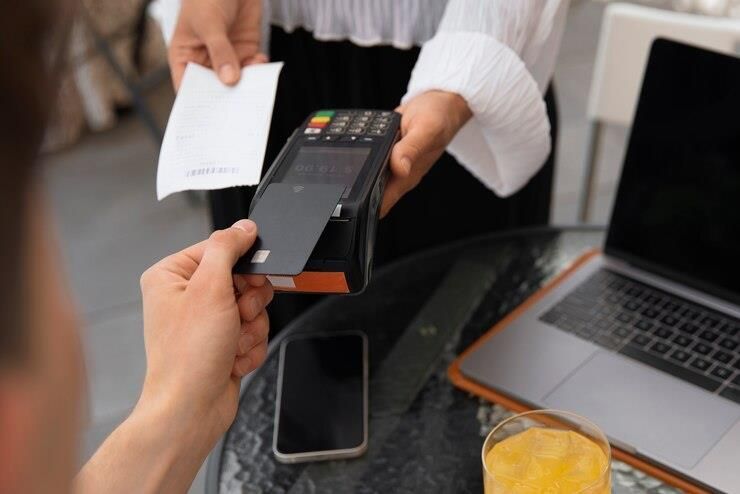
An Android EFTPOS terminal is a smart payment device running the Android operating system, combining contactless payment acceptance with business management tools like inventory tracking, loyalty programmes, and digital receipts. Unlike traditional EFTPOS machines, Android terminals are fully customisable, app-driven, and suitable for Australian businesses across retail, hospitality, healthcare, and more.
APS offers EFTPOS solutions for Australian businesses, including Android-powered PAX terminals built for mobility and speed.
What Is an Android EFTPOS Terminal?
An Android EFTPOS terminal is a payment device that runs on the Android operating system — the same platform powering hundreds of millions of smartphones worldwide — but built specifically for business payment environments.
Traditional EFTPOS terminals do one job: process card payments. They run on closed, proprietary operating systems you cannot modify, update independently, or expand with new software. An Android-based terminal does everything a standard EFTPOS machine does, then goes much further.
Here is what sets Android terminals apart:
- Open OS platform — install business apps directly on the device
- Touchscreen interface — intuitive for staff and customers alike
- Multi-connectivity — operate via 4G, Wi-Fi, or Bluetooth depending on your environment
- Integrated business tools — run POS software, loyalty programmes, inventory management, and digital receipts from one device
- Remote device management — update software, push settings, and monitor performance without touching the hardware
For Australian businesses already familiar with standard EFTPOS, the shift to an Android-powered terminal is less of a replacement and more of an upgrade. You keep the payment functionality you rely on and gain a full business management platform in the same device.
Why Australian Businesses Are Switching to Android EFTPOS
Australian SMEs are moving toward Android EFTPOS terminals because they deliver more value at a lower total cost than locked proprietary hardware.
The Australian payments landscape has shifted dramatically. According to the Australian Payments Network (AusPayNet), card-based and contactless transactions now dominate consumer spending, with Australians among the highest adopters of tap-and-go payments globally. Businesses that cannot accept fast, flexible, contactless payments are losing sales.
Proprietary EFTPOS hardware — the kind locked to a single bank or payment provider — limits your options. You cannot add software, switch providers easily, or adapt the device to new business needs. Android terminals remove those restrictions.
Key reasons Australian businesses are making the switch:
- Lower hardware costs — Android terminals often cost less upfront than bank-issued proprietary devices, with no lock-in to a single acquiring bank
- App ecosystem access — connect your preferred POS software, accounting tools, and loyalty platforms
- One device, multiple functions — replace several pieces of hardware with a single smart terminal
- Scalability — add locations, users, or features without replacing hardware
- Future-proofed — software updates keep the device current without new hardware investment
APS Business works with Australian businesses across multiple industries to identify the right Android EFTPOS terminal for their specific operational needs — not just the most popular model off a shelf.
Key Features to Look for in an Android EFTPOS Terminal
The best Android EFTPOS terminal for your business depends on how and where you trade. These are the features that matter most.
Essential features to evaluate:
- NFC/contactless payment acceptance — tap-to-pay via credit cards, debit cards, Apple Pay, and Google Pay is now a baseline customer expectation in Australia
- 4G and Wi-Fi connectivity — 4G capability ensures you can trade anywhere, not just in venues with reliable internet
- Battery life — for mobile use, look for terminals that sustain a full trading day on a single charge (8+ hours minimum)
- Thermal receipt printer — built-in printers add convenience; confirm paper roll size and print speed
- Barcode scanner — critical for retail and hospitality businesses managing product catalogues
- PCI DSS compliance — non-negotiable for any Australian business accepting card payments; confirm the device and its software stack meet current PCI DSS standards
- Inventory management integration — connects stock levels directly to your payment flow, reducing manual reconciliation
- Loyalty programme support — enables customer rewards directly at the point of sale
- Digital receipts — email or SMS receipts reduce paper costs and support sustainability goals
- Remote management capability — manage multiple devices across locations from a central dashboard
Match features to your trading environment. A market stall operator needs rugged hardware with strong 4G. A restaurant needs fast tableside processing and bill splitting. A retailer needs barcode scanning and stock integration.
Which Industries Benefit Most from Android POS Terminals?
Android POS terminals are genuinely versatile. These are the industries seeing the strongest operational improvements.
Restaurants and Cafés A Melbourne café owner who replaced a fixed countertop terminal with an Android handheld EFTPOS device reported immediate gains: staff now process tableside payments, split bills between multiple cards, and send digital receipts without returning to a fixed station. During peak morning service, queue times dropped and customer throughput increased — a direct impact on daily revenue.
Retail Retailers gain real-time stock visibility at the point of sale. Scan a barcode, process a payment, and update inventory simultaneously — all from one device.
Markets and Events A weekend farmers' market trader who switched to a 4G-connected Android terminal eliminated the risk of dropped Wi-Fi connections on venue networks. Tap-and-go transactions became reliable, faster, and the reduction in abandoned sales was noticeable within the first trading weekend.
Hospitality and Accommodation Hotels, bars, and function venues benefit from the flexibility to process payments anywhere on the property — poolside, in a function room, or at a pop-up bar.
Healthcare Allied health practitioners, clinics, and mobile healthcare providers use Android terminals to process payments at the point of care, reducing administration overhead and improving patient experience.
Field Services and Trades Electricians, plumbers, and delivery businesses collect payment on-site the moment a job is complete, eliminating invoice chasing.
How Android EFTPOS Terminals Personalise the Customer Experience
Android terminals do not just process payments — they create a smarter, more personalised transaction experience that directly influences customer spending behaviour.
According to Adobe for Business research, 61% of consumers say receiving personalised promotions makes them more likely to buy, and 72% say those offers have led them to spend more than they originally planned. Australian retailers can act on this data directly through features built into Android EFTPOS terminals.
Here is how personalisation works at the point of sale:
- Loyalty programme integration — customers earn and redeem points in the same transaction, without a separate app or card
- Targeted receipt messaging — include a personalised offer or next-visit discount directly on a printed or digital receipt
- Customer recognition — some Android POS systems link returning customers to their purchase history, enabling relevant upsell suggestions
- Split payments and flexible checkout — faster, frictionless checkout improves the overall experience and reduces cart abandonment in retail environments
All of this happens in one seamless payment flow. The customer taps their card, receives a digital receipt with a tailored offer, and their loyalty points update automatically. No extra steps, no separate loyalty terminal, no manual process.
Android EFTPOS vs. Traditional EFTPOS: What's the Real Difference?
| Feature | Traditional EFTPOS | Android EFTPOS Terminal |
|---|---|---|
| Operating system | Closed/proprietary | Open Android OS |
| Software flexibility | Fixed, bank-controlled | Install and customise apps |
| Connectivity | Fixed or single-mode | 4G, Wi-Fi, Bluetooth |
| Business tools | Payment only | POS, inventory, loyalty, receipts |
| Remote management | Limited or none | Full remote device management |
| Hardware updates | Replace the device | Software updates over the air |
| Cost of ownership | Higher long-term (locked in) | Lower long-term (open platform) |
| Provider flexibility | Often single-bank locked | Works with multiple acquirers |
Older proprietary terminals from established manufacturers like Ingenico and Verifone served Australian businesses well for years. Android-based alternatives now offer the same payment reliability with a significantly broader software and management capability — and without the lock-in constraints that frustrated many business owners.
What to Consider Before Choosing an Android EFTPOS Terminal in Australia
Buying the right Android EFTPOS terminal is a business infrastructure decision. These are the key considerations.
1. PCI DSS Compliance Any device processing card payments in Australia must meet current PCI DSS (Payment Card Industry Data Security Standard) requirements. Confirm the terminal hardware and its software stack are PCI DSS certified before purchasing.
2. Australian Payments Network Alignment The Australian Payments Network (AusPayNet) sets standards for interoperability and security across the Australian payments ecosystem. Ensure your terminal and provider operate within these standards. Visit austpayments.com.au for current compliance guidance.
3. Surcharging Rules The ACCC regulates payment surcharging in Australia — businesses cannot surcharge more than their actual cost of acceptance. Review current rules at accc.gov.au before configuring surcharge settings on any terminal.
4. Connectivity Reliability Assess your trading environment honestly. If you operate in a venue with unreliable Wi-Fi, a 4G-enabled terminal is essential. If you trade at outdoor events or markets, dual-mode connectivity (4G and Wi-Fi) provides redundancy.
5. Software Integration Confirm the terminal integrates with your existing accounting software (Xero, MYOB), inventory platform, and any loyalty tools you currently use. Switching payment hardware should simplify your workflow, not add complexity.
6. Hardware Durability Consider your physical environment. Food-service environments need spill resistance. Mobile traders need a robust build that handles transport daily. Check IP ratings where durability matters.
7. Ongoing Support Choose a provider who offers clear support — local technical support, warranty terms, and software update commitments matter as much as the device specifications.
Get Started with APS Business — Your Android EFTPOS Solution
APS Business helps Australian businesses find and deploy the right Android EFTPOS terminal for their industry, trading environment, and operational requirements.
Whether you run a busy café, a weekend market stall, a retail store, or a mobile healthcare practice, APS Business provides Android EFTPOS terminal solutions matched to your specific business context — not a one-size-fits-all product push.
Why choose APS Business:
- Specialists in Australian B2B equipment and technology procurement
- Solutions spanning hospitality, retail, healthcare, field services, and more
- Hardware aligned with PCI DSS compliance and Australian Payments Network standards
- Guidance on connectivity, software integration, and total cost of ownership
- Support from a team that understands the full picture — hardware, software, compliance, and operations
Android EFTPOS terminals represent the most practical upgrade available to Australian businesses processing card payments today. Faster transactions, smarter tools, lower long-term costs, and a customer experience that drives repeat spending — all from one device.
Visit aps.business today to explore Android EFTPOS terminal options for your Australian business and speak with a specialist about the right solution for your needs.