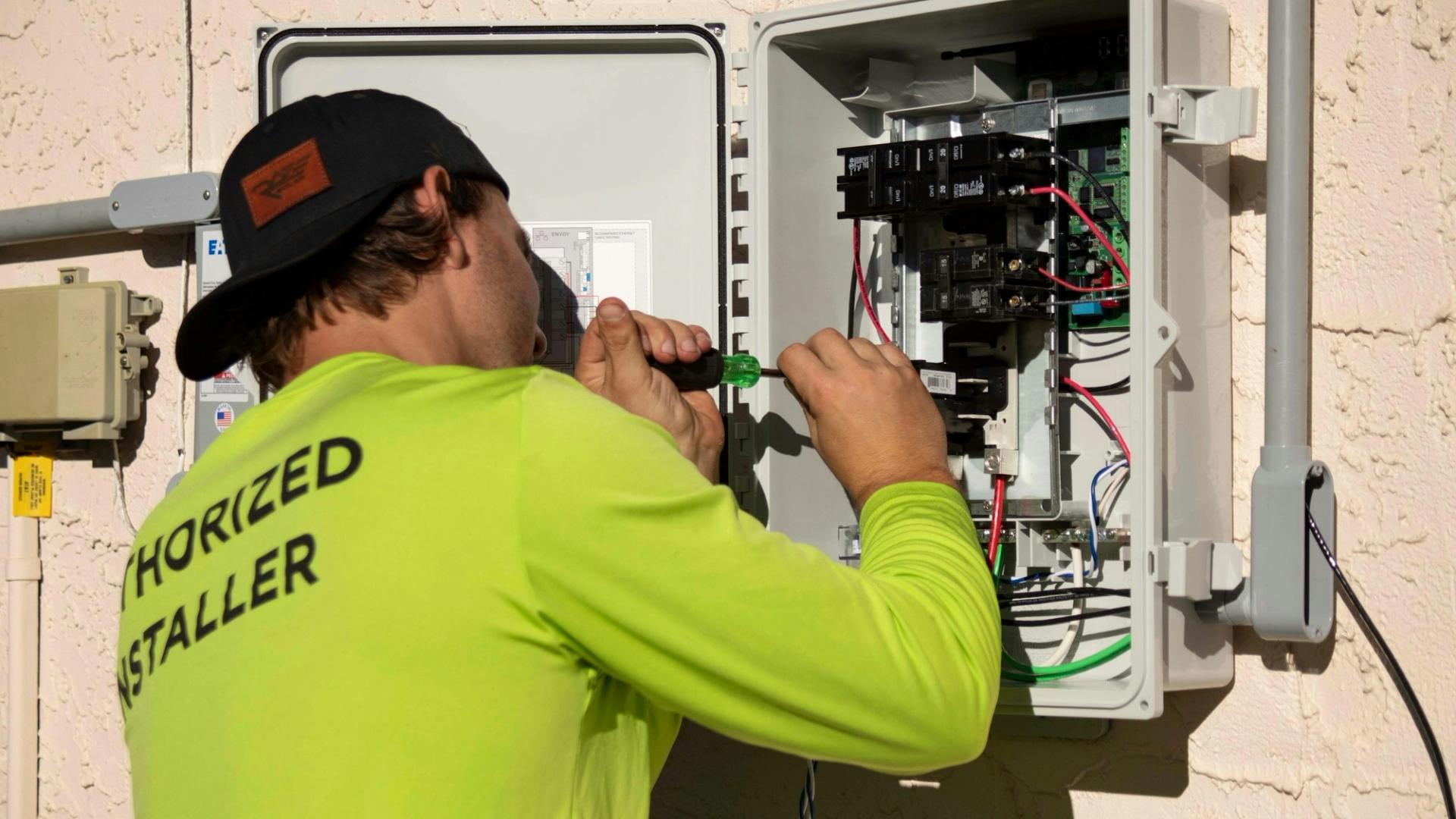
Payments for tradies in Australia are governed by both Security of Payment laws — which give subcontractors and contractors the right to progress payments and fast adjudication — and RBA surcharging rules that control what card fees can be passed on. Tradies also need a reliable payment solution that handles fast settlement, on-site invoicing, and tax compliance.
Late payments are not a minor inconvenience in the trades. They are a structural problem that costs Australian small businesses — particularly subcontractors and sole traders — real money every single month. APS operates within Australia's regulated payments environment, processing payments in compliance with current RBA and ACCC guidelines, and serves Australian trade and retail businesses that need practical, compliant solutions.
This guide covers the full picture: your legal rights under Security of Payment laws, how to make a valid payment claim, surcharging rules, tax obligations for FY2025–26, and what a modern trade payment solution should look like in 2026.
Why Getting Paid Is Still the Biggest Headache in the Trades
Late payments remain the single biggest cash flow threat for Australian tradies, subcontractors, and small construction businesses. Despite legal protections that have existed for decades, disputes, ignored invoices, and payment delays continue to erode margins and create serious financial pressure for trade businesses of every size.
The problem runs deep. A subcontractor finishes a fit-out on schedule, submits their invoice, and waits. The head contractor disputes a line item. The developer says approval is pending. Meanwhile, the tradie has wages to pay, materials to fund, and the next job starting in a week.
Key pressures facing Australian tradies around payments:
- Disputed invoices — especially on multi-trade commercial projects where scope creep is common
- Extended payment terms — head contractors and developers sometimes push 60 or 90-day terms onto subcontractors who cannot absorb that gap
- Cash-in-hand expectations — residential customers sometimes resist card payments or formal invoicing, creating tax and record-keeping problems
- Surcharge confusion — tradies don't know what card fees they can legally pass on, so they absorb costs instead
- No payment schedule received — a respondent simply ignores a payment claim, leaving the tradie unsure of their next step
This is precisely why understanding both the legal framework and the right payment technology matters. Security of Payment laws exist to protect tradies. A compliant, low-cost payment solution protects their margins.
How Australia's Security of Payment Laws Protect Tradies
Australia's Security of Payment legislation gives tradies and subcontractors a legally enforceable right to progress payments — without waiting for a contract dispute to go through the courts. Each state has its own Act, but the core framework is consistent.
Key state legislation:
| State | Act |
|---|---|
| NSW | Building and Construction Industry Security of Payment Act 1999 |
| QLD | Building Industry Fairness (Security of Payment) Act 2017 |
| VIC | Building and Construction Industry Security of Payment Act 2002 |
| WA | Construction Contracts Act 2004 |
Maximum payment terms under the Acts:
- NSW, VIC: 15 business days from the payment claim date (for head contractors paying subcontractors)
- QLD: 25 business days (head contractor to subcontractor)
- WA: 50 days (adjusted under the CCA framework)
The Acts apply to construction work and related goods and services carried out under a construction contract. This covers the vast majority of trade work — plumbing, electrical, carpentry, tiling, HVAC, painting, and more.
Critically, the Acts apply whether or not the contract is in writing. A verbal agreement on a residential renovation is still covered. This matters for tradies who regularly work off quotes and handshakes.
> The Jones Day Security of Payment white paper documents an adjudication determination of approximately $64 million — representing the scale of disputes that can arise even for mid-tier contractors — reinforcing why tradies at every level need to understand their payment claim rights, not just large firms.
For authoritative guidance on payment systems and dispute volumes in the construction industry, the Reserve Bank of Australia's payments system overview provides relevant context on how Australia's broader payments infrastructure supports businesses in high-transaction industries like construction.
How to Make a Valid Payment Claim as a Tradie
A payment claim is only legally valid under the Security of Payment Act if it meets specific formal requirements. Getting it wrong means you lose the statutory protections — including the right to adjudication and the ability to recover the debt as a judgment debt.
What a valid payment claim must include:
- Identify the construction work or related goods and services to which the claim relates — describe the work clearly, referencing the contract or quote if applicable
- State the amount claimed — be specific; include GST separately if applicable
- Request payment by the due date — reference the contract terms or the default terms under the Act
- State that it is made under the relevant Security of Payment Act — this is mandatory in NSW, QLD, and VIC; the exact wording required varies by state
In NSW, the claim must include an endorsement that it is made under the Building and Construction Industry Security of Payment Act 1999. Without this, it is not a valid payment claim under the Act and loses statutory protections.
In QLD, the claim must be submitted using the correct form (Payment Claim under the Building Industry Fairness Act) and served correctly.
Real-world scenario — the plumbing subcontractor:
A plumbing subcontractor completes a bathroom fit-out on a commercial project in Sydney. They submit their invoice with the Act endorsement on the correct date under their agreed reference date. The head contractor receives the claim but provides no payment and no payment schedule within the 15-business-day window.
At this point, the subcontractor has an immediately due debt. Under the NSW Act, the respondent has lost the right to dispute the claimed amount in adjudication (or in court proceedings under the Act) on any grounds not raised in a payment schedule — because no payment schedule was provided at all. The subcontractor can now apply for adjudication or pursue the debt through a court.
Common mistakes tradies make with payment claims:
- Forgetting the Act endorsement (NSW, VIC)
- Serving the claim to the wrong person or address
- Including work outside the contract scope without a variation agreement
- Missing the reference date or serving after it has passed
Payment Schedules, Adjudication, and What Happens When Someone Doesn't Pay
If a respondent wants to dispute or reduce a payment claim, they must issue a payment schedule within the time limit set by the Act — and they can only rely on reasons stated in that schedule. This is one of the most powerful protections the legislation provides for tradies.
Payment schedule rules:
- The respondent must serve a payment schedule within 10 business days of receiving the payment claim (NSW, VIC) or within 15 business days (QLD)
- The schedule must state the scheduled amount the respondent proposes to pay
- If the scheduled amount is less than the claimed amount, the schedule must state why — specific reasons, not vague objections
The critical rule: A respondent is locked into the reasons given in their payment schedule. If they did not mention a defect, a variation dispute, or a set-off in the schedule, they cannot raise it later in adjudication or court proceedings under the Act. This rule prevents respondents from manufacturing new reasons after the fact.
What happens if the respondent ignores the payment claim entirely:
- The entire claimed amount becomes immediately payable as a debt
- The tradie can apply for adjudication (seeking a binding determination, usually within 10 business days of the adjudicator's appointment)
- If adjudication succeeds, the determination can be filed as a judgment in a court and enforced like any court judgment — including garnishing accounts or issuing a statutory demand against a company
Adjudication in practice:
Adjudication is fast (compared to litigation), binding, and relatively low-cost. The tradie submits an adjudication application; the respondent has limited time to respond. The adjudicator makes a determination based on the claim, the payment schedule (if any), and the Act.
Adjudication does not prevent either party from later pursuing the full dispute in court — but it puts money in the tradie's hands while that process plays out.
Surcharging, Card Fees, and What Tradies Can Legally Pass On
Australian tradies can legally surcharge customers for card payments — but only up to the actual cost of accepting that payment method. The ACCC enforces the no-excessive-surcharging rule introduced by the Reserve Bank of Australia. Tradies who overcharge breach this rule.
Sole trader electrician — real-world scenario:
An electrician running their own ABN accepts Visa and Mastercard on-site for residential work. They want to pass on the terminal fee without overcharging. Their merchant services provider charges them 1.4% for Visa credit transactions. They can pass on 1.4% — not 2%, not a flat $5 fee unless that flat fee accurately reflects the per-transaction cost.
What tradies can and cannot do:
| Payment Method | Can Surcharge? | Cap |
|---|---|---|
| Visa / Mastercard credit | Yes | Cost of acceptance (typically 0.8%–1.8%) |
| Visa / Mastercard debit | Yes | Cost of acceptance (typically 0.4%–0.9%) |
| EFTPOS (domestic debit) | Yes | Cost of acceptance (typically very low) |
| American Express | Yes (if accepted) | Cost of acceptance |
| Bank transfer (EFT) | Generally no surcharge applies | N/A |
| NPP / PayID | No surcharge convention | N/A |
The RBA's surcharging framework sets out the rules in detail. Tradies must be able to demonstrate that any surcharge applied reflects actual cost — not a revenue-generating add-on.
Practical tip: If your payment provider gives you a blended rate, use that blended rate as your maximum surcharge. Do not surcharge above it.
Tradie Pay Rates, Allowances, and Tax — The Numbers That Matter
For employed tradies, pay rates are set under the Building and Construction General On-site Award 2020. For self-employed tradies, ATO tax rates for FY2025–26 directly affect take-home pay. Both employed and self-employed tradies need to understand these numbers.
Indicative pay rates (employed tradies, FY2026):
- Electrician (CW/ECW 3): approximately $35–$42/hour base rate under the Award, plus allowances
- Plumber (tradesperson): approximately $34–$40/hour base rate
- Carpenter/joiner: approximately $33–$39/hour base rate
Always verify current rates directly with the Fair Work Ombudsman's Pay Calculator — Award rates are updated annually, and penalties and allowances add significantly to base rates.
Key allowances under the Building and Construction General On-site Award:
- Tool allowance — paid to tradies who supply their own tools
- Travelling allowance — for travel to sites outside ordinary commute distance
- Living away from home allowance (LAFHA) — for tradies working remotely
- Industry allowance — a flat weekly allowance for on-site construction work
FY2025–26 tax rates for self-employed tradies:
The ATO's income tax rates for individuals for FY2025–26 are:
| Taxable Income | Tax Rate |
|---|---|
| $0 – $18,200 | Nil |
| $18,201 – $45,000 | 16% |
| $45,001 – $120,000 | 30% |
| $120,001 – $180,000 | 37% |
| $180,001+ | 45% |
The 2% Medicare levy applies on top of income tax for most taxpayers. Self-employed tradies running under an ABN must also consider GST registration (mandatory above $75,000 turnover), PAYG instalments, and super obligations if they hire employees or are classified as employees for super purposes.
Note: The Low Income Tax Offset (LITO) reduces the effective tax rate for lower-income earners and should be factored into take-home pay calculations.
Modern Payment Solutions Built for Trade Businesses
The best payment solution for a trade business in 2026 handles fast settlement, on-site invoicing, mobile payments, real-time transfers, and compliance with RBA surcharging rules — all without requiring a bookkeeper to manage it. Generic payment tools built for retail do not meet the specific needs of project-based trade work.
What tradies need from a payment solution:
- On-site card acceptance — EFTPOS terminal or tap-to-pay mobile solution
- Fast settlement — same-day or next-day funds in your account, not 3-business-day delays
- NPP / PayID support — the New Payments Platform enables real-time payments 24/7; RBA data confirms the NPP processed over 800 million transactions in FY2024, and adoption continues to grow rapidly in the trades
- Mobile invoicing — send a tax invoice on-site, accept payment immediately
- Transparent surcharging tools — so you can pass on card costs accurately without breaching ACCC rules
- Clear reporting — for BAS, GST reconciliation, and end-of-year tax
Why generic solutions fall short for tradies:
Most consumer payment apps are not built for the cash flow realities of construction. They lack the settlement speed tradies need when juggling materials costs and wage cycles. They do not provide the surcharging transparency required by ACCC rules. And they do not integrate well with the invoicing workflow of a trade business that may run 10–30 jobs simultaneously.
APS is built for Australian trade and retail businesses operating in exactly this environment. APS processes payments in compliance with current RBA and ACCC guidelines, making it straightforward for tradies to accept card payments on-site, issue compliant tax invoices, and settle funds fast — without eating into already-tight margins.
Whether you are a sole trader electrician handling residential service calls or a plumbing subcontractor managing progress claims on a commercial build, APS provides the trade business payment solution that matches how the industry actually works.
Get Paid Faster — Start with APS
Payments for tradies in Australia are complicated by slow-paying head contractors, disputed invoices, confusing surcharging rules, and tax obligations that change every financial year. But the legal framework exists to protect you — and the right payment technology makes compliance and cash flow management far simpler.
APS brings together fast settlement, on-site mobile payments, transparent surcharging tools, and RBA/ACCC-compliant processing — built specifically for Australian trade and retail businesses. You do not need to choose between getting paid quickly and staying compliant. With APS, you get both.
Ready to take control of your trade business payments? Visit aps.business to get started today.


